Sponsored by

Connected Devices
The New Nervous System of Modern Healthcare
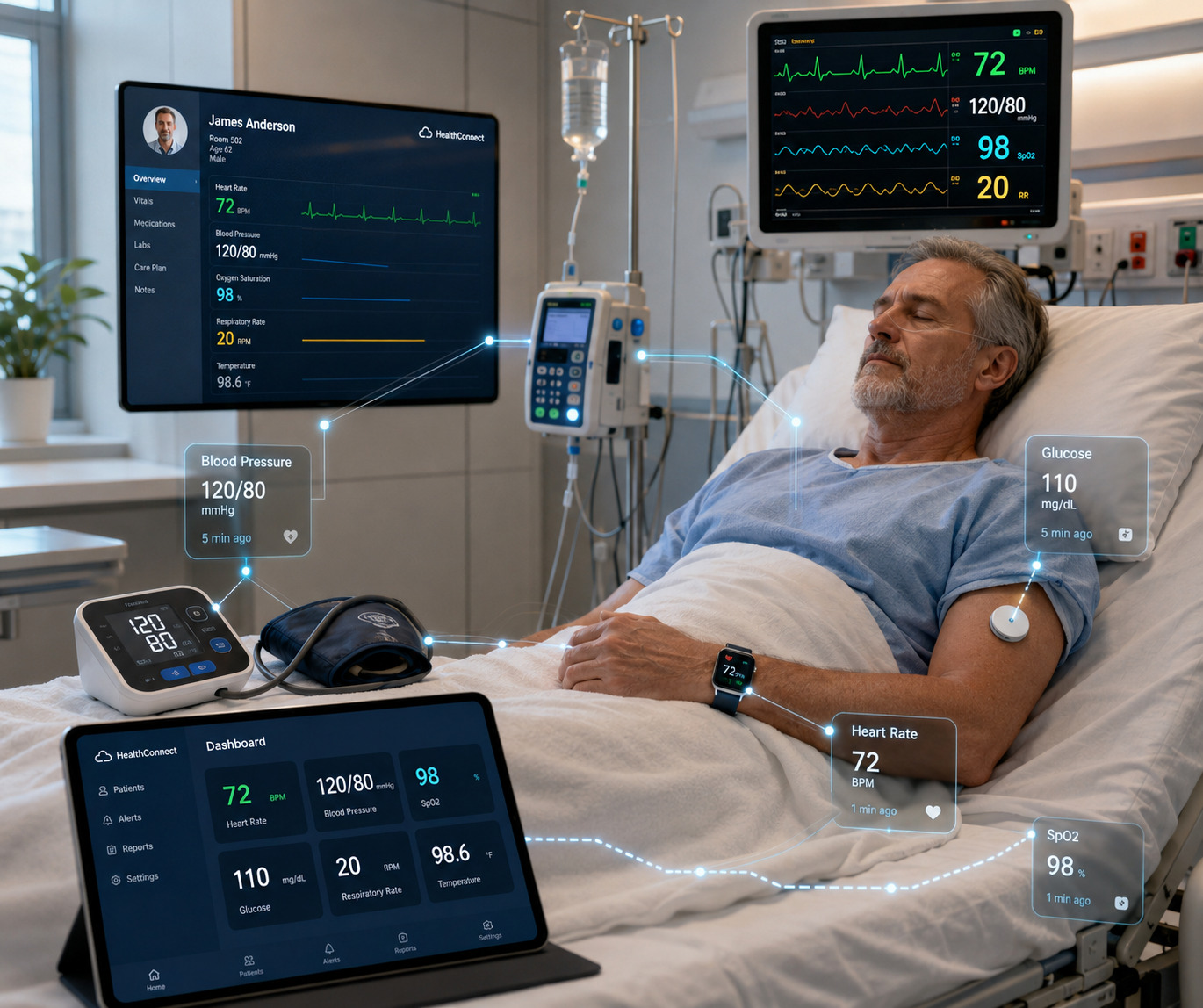
Connected devices are changing healthcare by turning ordinary medical tools into intelligent sources of real-time information. From wearable heart monitors and smart glucose sensors to connected blood pressure cuffs and hospital equipment, these devices help healthcare professionals understand what is happening with a patient before problems become emergencies.
In the past, many health checks only happened during appointments. Today, connected devices can monitor vital signs continuously and send updates securely to doctors, nurses or care teams. A patient recovering at home can be watched over digitally, while a person living with a chronic condition can receive earlier support when their readings show warning signs.
Inside hospitals, connected devices help improve speed, safety and coordination. Smart beds can track patient movement, infusion pumps can share medication data, and monitoring systems can alert staff when a patients condition changes. This creates a more responsive environment where care teams can act faster and make better-informed decisions.
The real power of connected devices is not simply the technology it is the connection they create between patient and provider. They help close the gap between hospital and home, appointment and follow-up, concern and action.
As healthcare becomes more digital, connected devices will play a bigger role in personalised care. They give patients more control, give clinicians clearer insight and help build a future where healthcare does not wait for illness to speak loudly before it listens.